

Why Unique Listeners for Your Podcast Are More Important Than You Think
Table of Contents
When podcasters talk about growth, the conversation almost always starts and ends with downloads.
How many downloads did this episode get?
How fast did it get them?
Did it outperform the last episode?
But focusing only on downloads can give you a very warped view of how your podcast is actually performing.
One of the most overlooked and misunderstood metrics in podcasting is unique listeners, and it is quietly one of the most important indicators of whether your show is healthy, sustainable, and worth continuing.
If you have ever felt disheartened by your download numbers or confused about what your stats really mean, understanding unique listeners can completely change how you see your podcast.
A Quick Overview of Podcasting Stats
Podcast hosting platforms give us a lot of data, and at first glance it can feel overwhelming. Before we look at unique listener numbers, let’s refresh some of the most popular podcasting stats we hear people in the podcasting world discussing.
Download Stats
Download numbers tend to take centre stage because they are the most visible and the easiest to understand.
A download is simply a file request. Someone, or something, asked for your episode and the platform delivered it. That is it.
Downloads do not tell you whether someone listened, how long they listened for, or whether they ever came back again. They are useful, but they are blunt.
Time Spent Listening
Then there is listener retention or time spent listening. This metric looks at how much of an episode people actually consume. Did they switch off after two minutes, or did they listen right to the end?
This can be incredibly helpful when you are refining your content, tightening your structure, or figuring out where people lose interest.
Retention tells you about the quality of a specific episode, but it still does not tell you much about the bigger picture of audience loyalty.
Consumption Per Listener
Another stat that often appears is episode consumption per listener. This looks at how many episodes someone listens to within a certain time frame.
Are people dipping in and out, or are they binging your back catalogue? This is where things start to get interesting, because it begins to hint at behaviour rather than raw numbers.
Unique Listeners
And then we get to unique listeners. This is the stat that pulls all of the others into context.
Unique listeners measure how many individual people are listening to your podcast within a given period, rather than how many total downloads your episodes generate.
Suddenly, instead of asking how many times your content was downloaded, you are asking how many people are actually showing up.
What Are Unique Listeners?
Most podcast hosts define a unique listener as someone who downloads your podcast from the same device and IP address within a selected time frame, following IAB guidelines.
In simple terms, it is an estimate of how many individual humans are listening to your show. It is not a perfect or exact science, for example, if someone listens on multiple devices, they may be counted more than once. If someone shares a device, they may be counted as one listener.
But despite those limitations, it gives you a far more realistic sense of your audience size than downloads alone ever could.
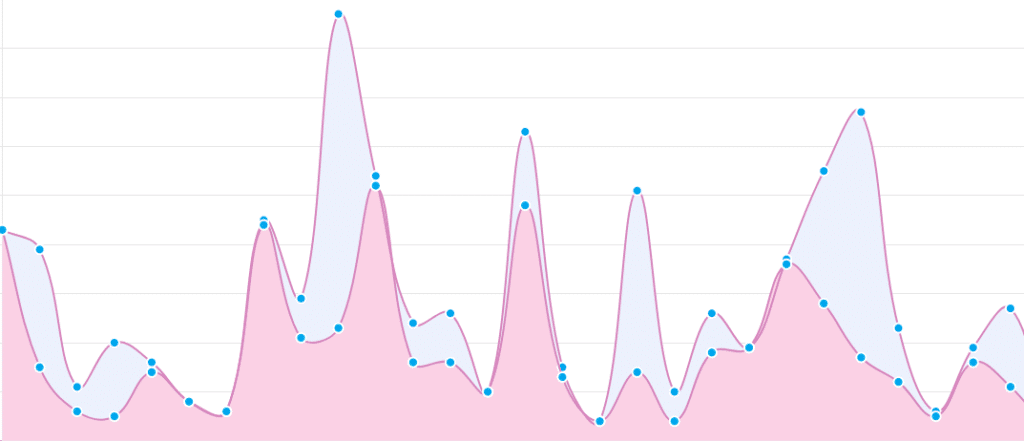
Unique listeners help you see patterns that downloads hide. For example, if a podcast has 1,000 downloads but only 200 unique listeners, that tells a very different story than a podcast with 1,000 downloads and 900 unique listeners.
In the first scenario, a smaller group of people are listening to multiple episodes. In the second, a lot of people are listening once and not coming back.
Neither is inherently bad, but they point to very different strategies.
When you look at unique listeners over time, you start to see whether or not people are returning to your show. You can see whether your content encourages listeners to stick around, explore your back catalogue, and build a relationship with your voice and your ideas.
And that metric is something that downloads alone can never show you.
Why Unique Listeners Matter More Than You Think
It is very easy to get caught up in the chase for new listeners. Social media tells us that growth means constantly reaching new people, posting endlessly, and promoting relentlessly.
But podcasting does not work in quite the same way as fast-moving platforms. Podcasts are slow burn content. They sit in directories, get searched for, and episodes can be discovered long after they are published.
Unique listeners shine a light on retention, and retention is where real podcast growth lives. It is far more valuable to have 30 people who listen to four episodes each than 100 people who listen to one episode and disappear.
Those returning listeners are the ones who trust you, recommend you, leave reviews, and actually get value from what you create.
When you focus on unique listeners, you stop asking how to shout louder and start asking how to be more useful. You begin to think about whether your content is strong enough to make someone come back for another episode. You start noticing whether people dip into your archive, which is a huge indicator that your podcast has depth and longevity.
There is also a practical side to this. If you ever want to monetise your podcast, collaborate with others, or justify the time you spend on it, knowing the size of your real audience matters. Whilst it can sometimes feel like sponsors care about downloads and not people, this is shifting, and people are wising up to the fact that large download numbers don’t always equal potential incomes. Also, communities are built on repeat listeners, not one-off clicks.
That’s why unique listeners give you a much clearer sense of the impact your podcast is actually having.
How Your Back Catalogue Helps Increase Your Unique Listener Numbers
One of the most striking lessons from looking at unique listeners is just how powerful a back catalogue can be.
Even when no new episodes are being released and no active promotion is happening, people are still finding podcasts through search, scrolling, and recommendations.
Good SEO in episode titles and show notes means your content continues to work for you long after you hit publish.
When new listeners find a show that answers a specific question or solves a problem they have right now, they often do not stop at one episode.
They scroll.
They download.
They binge.
Unique listener data makes this behaviour visible. You can see that people are not just landing on your podcast, but settling in.
This is why strong, clear episode topics matter so much. When your content is searchable and specific, it attracts the right listeners. When it is genuinely helpful, those listeners stick around.
Over time, this builds an audience that grows quietly and steadily, rather than spiking and disappearing.
Why You Do Not Need to Promote Constantly
Another important lesson that unique listeners teach us is that constant promotion is not the only path to growth.
There is a lot of noise in the podcasting space about how often you should post, when you should post, and how visible you should be. While promotion has its place, it is not the foundation of a successful podcast.
Searchability and substance often matter more than frequency. If your episodes are well titled, clearly described, and genuinely useful, they will continue to attract listeners without you having to push them every day.
Unique listeners help you see this in action, because they show you new people arriving and existing listeners returning even during quiet periods.
This can be incredibly reassuring if podcasting is not your main job, or if you need to take breaks. It reframes success away from constant output and towards lasting value. A podcast that supports listeners over time is far more sustainable than one that relies on relentless visibility.

Focusing On Retention Over Reach
When you shift your focus to measuring unique listeners, you also start thinking differently about where to put your energy.
Instead of trying to reach as many people as possible, you begin to prioritise serving the people who are already listening. You refine your message, deepen your topics, and trust that the right listeners will find you through search and recommendations.
This approach is often more realistic and more rewarding. Building trust with a smaller audience creates momentum that chasing numbers never does. Those listeners are more likely to engage, share your work, and feel invested in what you create.
Over time, that kind of loyalty leads to organic growth that feels natural rather than forced.
Conclusion
Unique listeners are not just another stat to glance at and forget. They are one of the clearest indicators of whether your podcast is doing what it is meant to do, which is connecting with people in a meaningful way.
While downloads tell you how often your content is accessed, unique listeners tell you who is actually showing up and coming back for more.
By paying attention to unique listeners, you gain insight into retention, loyalty, and the real size of your audience. You stop chasing vanity metrics and start valuing impact. You begin to see your podcast not as a numbers game, but as a growing library of content that continues to serve listeners long after it is published.
If you take one thing away from this, let it be this: A podcast does not succeed because it is downloaded a lot once. It succeeds because people return, listen again, and find enough value to stay. And that is exactly what unique listeners help you understand.

Verity Sangan
Hey! I'm Verity. I love all things podcasting and am passionate about helping more women to find their voice through podcasting. When I'm not working or busy with mum duties, I host Podcasting for Indie Podcasters (formerly The Lazy Girl's Guide to Podcasting).